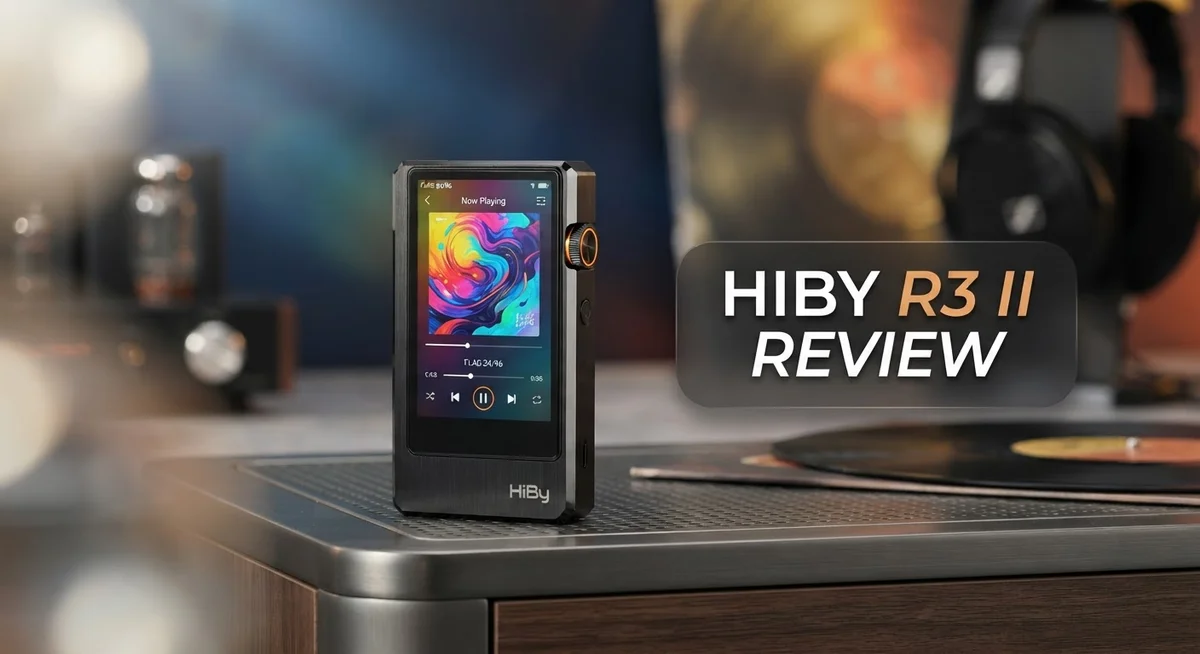
HiBy R3 II Review 2026: Is It Worth Your Money?
Looking for a small music player that sounds big? The HiBy R3 II might be your answer. This tiny DAP packs serious power into a pocket sized body.
HiBy built this player for music lovers who want more than phone audio. It uses dual ES9219C DAC chips. These chips handle DSD256 and PCM 384kHz/32-bit files with ease.
The R3 II pushes out 380mW through its 4.4mm balanced output. That is strong power for a mid-range DAP. Your headphones will thank you.
This review breaks down every feature of the HiBy R3 II. We will look at sound quality, build design, and battery performance. We will also compare it to rivals like the HiBy R3 Pro II and Shanling M3X.
Ready to see if this little player deserves a spot in your pocket? Let’s dive in.
In a Nutshell
The HiBy R3 II packs a lot into a small body. Here is a quick summary of what makes this player worth a look.
- Dual ES9219C DAC chips power this device. They handle DSD256 native playback and PCM files up to 384kHz/32-bit. Your music gets clean detailed sound.
- Battery life impresses with a 4000mAh cell. You get around 21 hours of playback on single ended output. Charging takes less than 2 hours.
- Build quality feels premium. The design stays sleek and pocket friendly. HiBy focused on making this DAP easy to carry anywhere.
- The volume knob stands out. It feels smooth and precise during use. Small details like this add to the experience.
- USB DAC support adds flexibility. You can connect the R3 II to your laptop or phone. It turns into an external sound card instantly.
- HiByOS runs the show, though some users report quirks. The platform still delivers solid hi-res audio support.
- Streaming stays limited without phone pairing. Keep this in mind if you rely on apps like Spotify.
This player suits anyone who wants better sound without extra bulk.
Audio Performance and DAC Technology
The HiBy R3 II delivers impressive audio performance through its dual ES9219C DAC chips. These processors handle high resolution files with ease and precision.
This player supports DSD256 native playback and PCM files up to 384kHz at 32 bit depth. Music lovers get access to premium audio formats without compromise. The dual DAC setup ensures clean signal processing and reduced noise during playback.
Output power reaches 380mW through the balanced 4.4mm connection at 32 ohms. This high output level matters for portable audio. You can drive demanding headphones and earbuds without a separate amplifier. The balanced output also reduces crosstalk and improves stereo separation compared to single ended connections.
The touchscreen display measures 3.2 inches diagonally. This size strikes a balance between usability and portability. You navigate menus easily without fumbling with tiny buttons. The screen stays responsive during regular use.
USB DAC functionality opens new possibilities. Connect the R3 II to your computer or smartphone and use it as an external sound card. This feature extends the device’s usefulness beyond portable listening. Desktop listeners gain access to the same DAC quality during studio work or casual computer listening.
Battery performance supports extended listening sessions. The 4000mAh cell delivers approximately 21 hours of playback through the 3.5mm single ended output. Balanced output draws more power, so real world usage varies. Full charging takes less than two hours with a compatible charger.
HiByOS powers the entire experience. This custom operating system provides access to local file playback and basic streaming functions. Some users report occasional software quirks, though firmware updates continue to improve stability.
The R3 II excels at delivering quality sound in a compact package. The dual DAC architecture combined with high output power creates a capable portable player. Whether you stream from your phone or load local files, this device prioritizes audio fidelity. The balanced output and USB DAC support make it versatile for different listening scenarios.
Design, Build Quality, and Portability
The HiBy R3 II feels solid in your hand. Premium materials make up the chassis, and the device resists fingerprints well. The aluminum body gives it a professional look that doesn’t scream “budget player.”
The touchscreen measures 3.2 inches and sits flush with the frame. It’s bright enough for outdoor use, though direct sunlight can wash out the display. The glass feels responsive when you tap or swipe through menus.
One standout feature is the volume knob on the side. It’s not just functional—it’s genuinely satisfying to use. The knob has a smooth, precise feel that makes adjusting levels intuitive. You don’t need to hunt through menus to change volume.
Size matters for portable audio. The R3 II fits easily into a shirt pocket or small bag. It weighs just enough to feel substantial without becoming a burden. The compact form factor means you can take it anywhere without thinking twice.
The 4000mAh battery keeps this player running for extended sessions. Real world use shows roughly 21 hours of playback through the 3.5mm single ended output. Charging takes less than two hours for a full battery, so you won’t wait long before using it again.
The touchscreen adds modern convenience, but the physical controls remain accessible. You get both worlds—new interface options and traditional hands on control through the volume knob.
Build quality shows attention to detail. Seams are tight, buttons feel clicky, and nothing rattles inside. This device should survive daily pocket carry without issues. The design philosophy balances aesthetics with functionality.
Portability defines the R3 II’s purpose. It’s small enough for commutes, gym sessions, or travel. The sleek profile means it won’t bulk up your bag. Whether you’re walking to work or flying across the country, this player adapts to your lifestyle.
The R3 II proves that compact doesn’t mean cutting corners. It delivers both durability and style in a package that fits your pocket.
Display, Interface, and User Experience
The 3.2 inch touchscreen serves as your main gateway to music on the R3 II. The display responds quickly to taps and swipes. Colors appear vibrant, and brightness adjusts well in different lighting conditions. Text remains readable without straining your eyes.
Navigation feels intuitive once you learn the layout. Menu options stack logically. You won’t need to dig through confusing submenus to find what you want. The interface responds smoothly to your inputs. Scrolling through large music libraries happens without lag or stuttering.
HiByOS powers everything behind the scenes. This custom operating system keeps the R3 II focused on one job: playing music well. You won’t find apps or social media distractions here. The OS prioritizes audio playback and file management. Some users report occasional quirks, but updates continue to improve stability.
The side mounted volume knob deserves special attention. This physical control feels premium and responsive. Adjusting volume happens instantly without touching the screen. The knob provides tactile feedback that digital buttons simply cannot match. You can make precise volume changes by ear.
The touchscreen and physical controls work together nicely. You can navigate menus with the screen, then use the knob for volume adjustments. This hybrid approach combines modern convenience with traditional simplicity. Neither control feels like a compromise or afterthought.
Battery life supports extended listening sessions. The 4000mAh cell delivers approximately 21 hours of playback through the 3.5mm connection. Balanced output via 4.4mm drains the battery faster. Full charges take less than two hours when using a compatible charger.
The compact form factor means you slip the R3 II into your pocket easily. The touchscreen doesn’t catch or snag on fabric. The smooth edges and rounded corners prevent discomfort during extended use. This player stays with you throughout your day without feeling like a burden.
Overall, the display and interface experience feels refined and purposeful. The R3 II balances modern touchscreen convenience with tactile physical controls. Navigation remains straightforward whether you’re a first time user or an experienced audiophile.
Top 3 Alternatives
Sony NW-A306

- Wi-Fi compatible for direct download and streaming
- Made with a rigid aluminum frame and gold solder inside a precisely engineered chassis

Last update on 2026-09-20 / Affiliate links / Images from Amazon Product Advertising API
The Sony NW-A306 offers high-resolution audio playback with a compact design. This player supports multiple audio formats and delivers crisp sound quality for music lovers. The touchscreen interface makes navigation simple and intuitive.
Battery life runs strong throughout your day. The device connects via Bluetooth for wireless listening. You get a lightweight player that fits in your pocket easily.
Astell&Kern A&norma SR25

- 【Compatible Model】 Screen Protector for Astell&Kern A&norma SR35 / SR25 MKII / SR25
- 【Front and Back】 This package includes Front Screen Protector and Back Surface Protector
Last update on 2026-09-20 / Affiliate links / Images from Amazon Product Advertising API
The Astell&Kern A&norma SR25 brings premium sound engineering to portable listening. This player features a larger screen and intuitive controls. The device handles high-resolution audio files without breaking a sweat.
The build quality feels solid and professional. Dual audio outputs give you flexibility in how you connect your headphones. The interface responds quickly to your touches and commands.
FiiO M11 Plus

- A Brand-New Processor That Surpasses Competing Products — Qualcomm Snapdragon 680 Built on a 6nm...
- Patented Desktop Mode with 950mW High Power Output: When Desktop Mode is activated, the M21 operates...
Last update on 2026-09-20 / Affiliate links / Images from Amazon Product Advertising API
The FiiO M11 Plus combines powerful processing with versatile connectivity options. This player supports numerous audio formats and wireless streaming. The screen displays your music library clearly and responsively.
You get expandable storage for thousands of songs. The device includes balanced audio outputs for enhanced sound. Battery performance keeps music playing through long listening sessions. The FiiO M11 Plus appeals to both casual listeners and audio enthusiasts who want flexibility and performance in one package.
Battery Life and Charging
The 4000mAh battery inside the R3 II keeps this player running for about 21 hours on a single charge when using the standard 3.5mm headphone output. This runtime makes the device ideal for long trips, commutes, or extended listening sessions without needing a power bank.
Charging happens quickly with the included USB cable. You can fully recharge the battery in less than 2 hours, so a brief coffee break gets you back to full capacity. This fast turnaround means minimal downtime between listening sessions.
The balanced 4.4mm output draws more power than the standard 3.5mm connection, so expect slightly shorter battery life when using higher impedance headphones. Most users still report solid all day usage even with balanced audio. The touchscreen display also impacts power consumption, but the R3 II manages this well through its efficient processor.
Real world battery performance depends on several factors. Volume level matters significantly, as does the audio format you’re playing. DSD files consume more battery than standard MP3s. Streaming over Bluetooth or using USB DAC mode will drain the battery faster than local playback.
Battery management feels straightforward on this player. The HiByOS interface shows your remaining charge clearly on the home screen. You can monitor power consumption in real time, which helps you plan longer listening sessions. The battery indicator updates accurately throughout the day.
For portable audio enthusiasts, the R3 II strikes a good balance between performance and endurance. Twenty one hours of playback puts this device ahead of many competitors in its class. The fast charging capability means you spend less time tethered to a wall outlet.
If you frequently travel or spend long days away from charging outlets, this battery performance removes a major concern. The R3 II handles extended use without constant anxiety about running dry. Combined with its compact size, the battery life reinforces why this player works so well for on the go listening.
Connectivity and Format Support
The HiBy R3 II connects to your music library through multiple pathways. USB DAC support lets you hook the player to computers and other devices for expanded functionality. This feature opens doors for users who want flexibility beyond standalone playback.
Format support on the R3 II covers the full spectrum of audio enthusiasts. The player handles DSD256 native playback, which matters if you own high resolution digital audio files. Standard PCM files go up to 384kHz at 32 bit depth. This means virtually any music file you own will play without conversion issues.
The dual ES9219C DAC chips power the audio conversion. These chips work together to deliver clean signal processing. They handle everything from compressed MP3s to uncompressed studio masters. The processing happens silently in the background while you enjoy your music.
Connectivity options give you control over how you listen. The 3.5mm single ended output provides standard connection to most headphones and earbuds. The 4.4mm balanced output delivers higher power at 380mW into 32 ohm loads. Balanced connections reduce noise and improve channel separation for sensitive listeners. You choose based on your headphone equipment.
Streaming capability represents one area where the R3 II shows limitations. The player doesn’t integrate Spotify, Apple Music, or other streaming services natively. You’ll need to rely on your smartphone for streaming apps. This design choice keeps the focus on local file playback and high resolution audio.
The HiByOS platform manages all these connections and formats seamlessly. Navigation between different file types feels smooth. Switching outputs happens instantly without any disruption. The interface responds quickly to your commands.
For serious listeners, format flexibility removes frustration from daily use. You won’t encounter unsupported files or compatibility headaches. Whether you’re playing obscure DSD recordings or everyday MP3s, the R3 II handles everything with equal competence. This versatility makes the player a reliable companion for music lovers with diverse collections.
Pros and Cons
Pros
- Dual ES9219C DAC chips deliver high resolution audio with DSD256 and PCM 384kHz support
- 380mW balanced output (4.4mm) provides plenty of power for demanding headphones
- Sleek, pocket sized design makes this player genuinely portable without sacrificing build quality
- Physical volume knob offers tactile control that touchscreens simply cannot match
- 21 hour battery life on standard 3.5mm output keeps you listening all day long
Cons
- HiByOS platform has generated user concerns about stability and interface responsiveness
- Streaming capability remains limited compared to using a smartphone for music services
- Charging takes less than 2 hours, but balanced output mode drains battery faster than expected
Who Should Buy It
The HiBy R3 II works best for specific listener profiles. If you own high-impedance headphones or demanding IEMs, this player’s 380mW balanced output delivers the power you need.
Audiophiles who value hi-res formats will appreciate what this device does. DSD256 and PCM 384kHz playback means your music files get proper treatment. The dual ES9219C DAC chips handle these formats without compromise.
Portable music lovers find real value here. The pocket-sized design and 21-hour battery life suit people who travel frequently or work away from home. You get serious audio quality without lugging around a heavy device.
This player suits users who prefer local music libraries over streaming apps. If you’ve invested in FLAC files, DSD albums, or other high-quality formats, the R3 II reads them all. Local playback gives you complete control over your music experience.
The physical volume knob appeals to people who dislike touchscreen controls. Tactile feedback matters during commutes or outdoor listening. You adjust volume without looking at the screen.
However, streaming-focused listeners should consider alternatives. The R3 II lacks robust support for Spotify, Apple Music, or similar services. If streaming is your primary music source, a smartphone handles this better.
Users who want absolute simplicity might find HiByOS challenging. The operating system has generated mixed feedback from the community. Some people struggle with interface responsiveness or stability issues.
The R3 II attracts collectors and enthusiasts most strongly. These listeners appreciate build quality, audio performance, and design. They view a dedicated player as a worthwhile investment.
Casual listeners who stream casually and use basic earbuds won’t notice this player’s advantages. A smartphone serves them perfectly fine.
In summary, buy the R3 II if you own quality headphones, listen to hi-res files locally, and value portability. Skip it if streaming dominates your listening habits or you prefer simpler interfaces. The device shines for serious audio enthusiasts who appreciate what dedicated hardware delivers.
Final Verdict
The HiBy R3 II earns its place as a solid choice for anyone who loves music on the go. Its combination of premium build and high resolution playback stands out in this price segment.
This player shines brightest for people who already own a collection of hi-res tracks. If you store FLAC or DSD files locally, this device turns them into something special.
The volume knob alone makes this player feel different from typical touchscreen only devices. Small details like this add up to a satisfying daily listening experience.
Beginners who mostly stream from Spotify or Apple Music should think twice. The R3 II works best as a companion to a music library, not a replacement for streaming apps.
Compared to the HiBy R3 Pro II, this base model gives up some battery life and output power. Buyers who want the absolute best specs might stretch toward that upgraded version instead.
The Shanling M3X offers a different DAC flavor with its AKM chip, giving listeners another sound signature to consider. Your choice here comes down to personal taste in tuning.
For most casual listeners, the R3 II might feel like more than they need. Basic earbuds and casual streaming habits won’t reveal what makes this player special.
But for the dedicated audiophile or the collector who values physical controls and format flexibility, this device delivers real satisfaction. It rewards people who care about sound quality first.
The final call rests on your listening habits. If local libraries and hi-res formats matter to you, the HiBy R3 II earns a strong recommendation. If streaming convenience tops your list, look elsewhere in this category.
Frequently Asked Questions
Does the R3 II support lossless streaming services?
The R3 II connects to streaming apps through its HiByOS platform, but streaming capability remains limited compared to smartphones. You can use services like Tidal or Qobuz if HiByOS supports them, but the experience differs from dedicated apps on your phone. Most users prefer loading local hi-res files instead.
The player excels when you own a personal music library. You store your FLAC, DSD, or WAV files directly on the device and play them without internet dependency. This approach gives you the best sound quality and battery life.
Can I use the R3 II as a portable DAC for my phone?
Yes. The R3 II includes USB DAC support, which means you can connect it to your smartphone or computer. Your phone sends audio data to the R3 II’s dual ES9219C DAC chips, and the player handles all the processing.
This setup works well if you want to upgrade your phone’s audio quality. The R3 II’s powerful amplifier then drives your headphones with clean, amplified sound. Just connect via USB cable and select the appropriate input mode on the device.
How does the R3 II compare to the R3 Pro II?
The R3 Pro II steps up with a superior DAC, better battery endurance, and higher output power. If you demand maximum performance and don’t mind a slightly larger device, the Pro II is worth considering.
The base R3 II still delivers excellent sound and remains genuinely portable. It suits listeners who balance performance with pocket-friendly sizing. Both models share the same touchscreen and HiByOS platform, so the core experience feels familiar.
Is HiByOS easy to use?
HiByOS has generated mixed feedback from users. Some find the interface intuitive and quick. Others report stability concerns and occasional lag when navigating menus.
The physical volume knob on the R3 II helps offset any touchscreen frustration. You get tactile control without relying solely on screen taps. If you prefer simplicity and minimal menu diving, you might find the learning curve steeper than expected.

Hi, I’m Joy! I’m a passionate tech enthusiast with years of experience testing and reviewing the latest gadgets and software. I started TechReviewed.blog because I believe everyone deserves access to honest, straightforward tech advice without the marketing fluff.