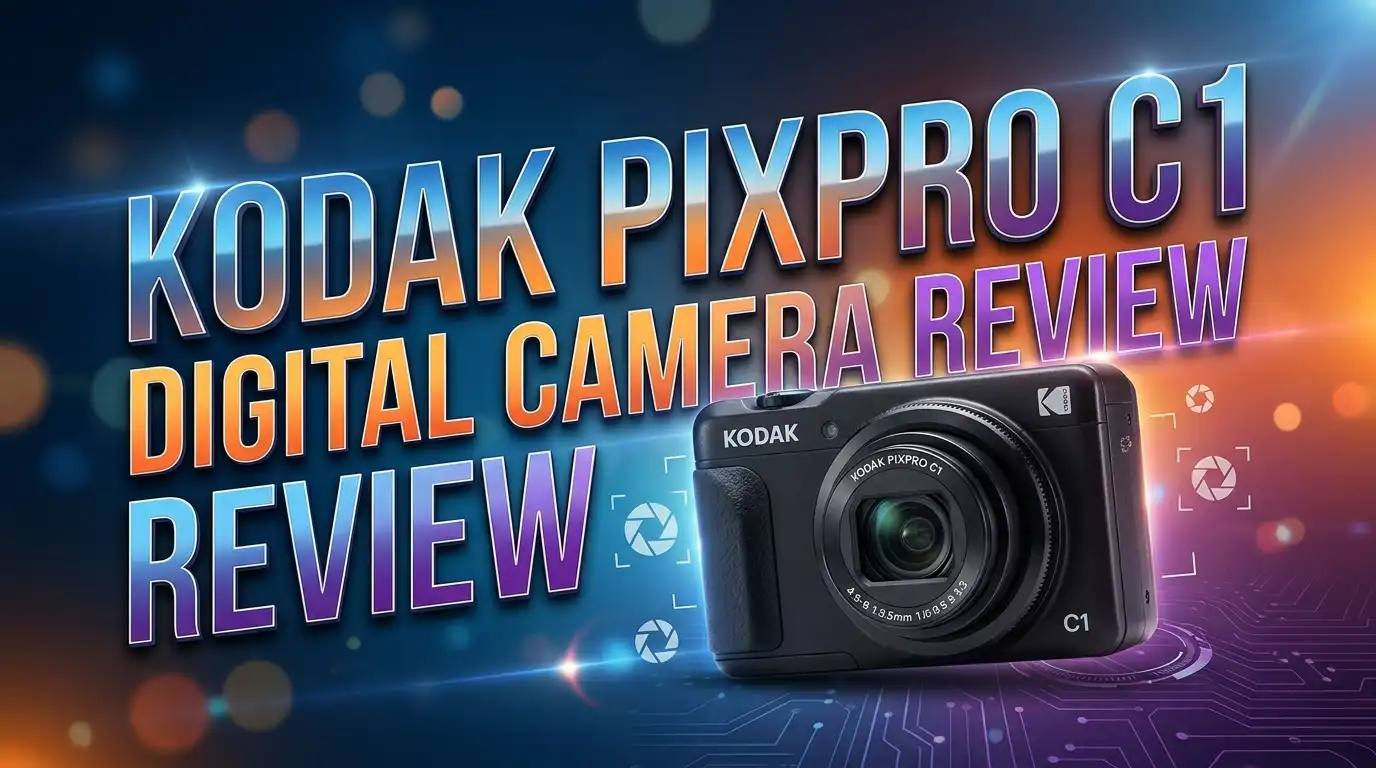
Kodak PIXPRO C1 Digital Camera Review 2026: Worth Your Money?
Are you looking for a simple, affordable digital camera that fits right in your pocket? The Kodak PIXPRO C1 has been one of the most talked about budget compact cameras since its release.
It blends a retro design with modern basics like a flip screen and USB-C charging. But does it actually deliver good results for its price tag?
In this full review, we break down everything about the Kodak PIXPRO C1. We cover its 13MP sensor, image quality, video performance, design, and more. Keep reading to find out if this under $100 camera is the right pick for you in 2026.
Key Takeaways
- The Kodak PIXPRO C1 costs under $100, making it one of the cheapest new digital cameras you can buy today. It is a solid choice for anyone on a tight budget who wants a dedicated camera separate from their smartphone.
- The camera features a 13MP BSI CMOS sensor with a bright f/2 lens and a 4x digital zoom. It performs well in good lighting conditions but struggles in low light and dim environments.
- Its 180-degree flip screen is a standout feature at this price point. The 2.8-inch LCD tilts upward for easy selfies and vlogging, though it suffers from glare in bright sunlight.
- At just 115 grams, this camera is extremely lightweight and portable. You can slip it into any jacket pocket without noticing the extra weight, perfect for travel and casual outings.
- Video recording is available at 1080p Full HD, but the lack of image stabilization and face autofocus makes it less ideal for serious vlogging or action recording.
- The camera charges via USB-C and has a built-in lithium-ion battery that lasts about 200 shots per charge. It uses microSD cards for storage, supporting up to 32GB.
Kodak PIXPRO C1 Digital Camera Overview

- 13MP Sensor: Captures detailed photos with a CMOS sensor and a bright f/2.0 wide angle lens
- 26mm Fixed Focus Lens: Wide angle framing for selfies, group shots, and travel scenes, with no zooming or...

Last update on 2026-10-23 / Affiliate links / Images from Amazon Product Advertising API
The Kodak PIXPRO C1 is a compact point-and-shoot digital camera aimed at beginners and casual photographers. It launched as a budget-friendly option from Kodak’s PIXPRO line, sitting below models like the FZ55 and FZ45 in terms of features. The camera focuses on simplicity and portability above all else.
At its core, this is a camera that does the basics well. You press the shutter button, and it takes a photo. There are no complicated menus or advanced settings to learn. This makes it a great option for kids, seniors, or anyone who wants a simple device for quick snapshots.
The retro styling gives the PIXPRO C1 a distinct personality. It looks like a camera from the early 2000s, which is part of its charm. The current trend of “digicam aesthetics” on social media has clearly influenced its design direction. Kodak knows its audience well here.
Kodak PIXPRO C1 Design and Build Quality
The first thing you notice about the PIXPRO C1 is how small and light it really is. It measures just 103 x 60 x 20.3mm and weighs only 115 grams. That makes it one of the slimmest compact cameras available right now.
The body has a leatherette-style grip that adds a vintage touch. It looks more expensive than it actually is. However, the build quality is mostly plastic, and it does feel somewhat toy-like in hand. You won’t mistake this for a premium device.
The 2.8-inch LCD screen tilts a full 180 degrees upward for selfies. The hinge works fine but feels a bit fragile. You will want to be careful when flipping it up and down repeatedly. The controls are simple tactile buttons with no touchscreen.
The camera comes in two color options: black and brown. Both carry that classic Kodak retro vibe that many buyers find appealing.
Kodak PIXPRO C1 Sensor and Image Quality
The PIXPRO C1 uses a 13MP 1/3-inch BSI CMOS sensor paired with a 26mm f/2 lens. This is a small sensor by modern standards. But for a camera at this price, the results can be surprisingly pleasant in the right conditions.
In bright daylight, photos come out with vibrant colors and decent detail. The dynamic range is better than you might expect for such a tiny sensor. Images are perfectly fine for social media posting and casual sharing.
However, once lighting drops, the camera shows its limits fast. Noise creeps in quickly in dim environments. There is no optical image stabilization, so even slight hand movements can cause blur in low-light shots.
The lens has a fixed 26mm focal length, which is great for group shots and selfies at arm’s length. The 4x zoom is digital only, which means image quality degrades as you zoom in. For best results, stay at the widest setting.
Top 3 Alternatives for Kodak PIXPRO C1
1. Kodak PIXPRO FZ55 — This is Kodak’s popular 16MP compact camera with a true 5x optical zoom and a 2.7-inch LCD. It offers better zoom quality and a slightly higher resolution sensor than the C1. It is a great step up if you need real optical zoom.

- 16MP Sensor: Captures detailed photos with a CMOS sensor for everyday shooting
- Optical Zoom: 5x optical zoom with a 28mm wide angle lens for flexible framing indoors or outdoors
Last update on 2026-10-23 / Affiliate links / Images from Amazon Product Advertising API
2. Kodak PIXPRO FZ45 — Another affordable Kodak option, the FZ45 features a 16MP sensor with 4x optical zoom. It lacks the flip screen of the C1 but offers optical zoom, which gives you sharper zoomed-in photos.

- 16MP Sensor: Captures detailed photos with a CMOS sensor for everyday shooting
- Optical Zoom: 4x optical zoom with a 27mm wide angle lens for flexible framing indoors or outdoors
Last update on 2026-10-23 / Affiliate links / Images from Amazon Product Advertising API
3. Canon PowerShot ELPH 180 — This Canon compact camera packs a 20MP sensor with 8x optical zoom and optical image stabilization. It is a generation older but still outperforms the C1 in image quality and versatility.

- 8x Optical Zoom with Optical Image Stabilizer helps you capture images with flexibility and ease
- 20.0 Megapixel CCD sensor combines with the DIGIC 4 plus Image Processor to help deliver stunning image...
Last update on 2026-10-23 / Affiliate links / Images from Amazon Product Advertising API
Kodak PIXPRO C1 Video Performance
The PIXPRO C1 records video at 1080p Full HD at 30fps or 60fps. On paper, this sounds respectable for a budget camera. The actual video quality is decent in well-lit conditions with stable, usable footage.
The main problem is the lack of any image stabilization. If you walk while recording, the footage becomes noticeably shaky. This is a big drawback for anyone hoping to use it as a vlogging camera, despite the flip screen being perfect for that purpose.
Another issue is the absence of face autofocus during video. The camera can miss focus on your face and stay that way throughout the entire clip. This makes selfie-style vlogging frustrating at times.
One pleasant surprise is the built-in microphone quality. Audio recorded on the camera sounds clear and usable. With some basic noise removal in editing, the audio is good enough for casual vlogs and short clips.
Kodak PIXPRO C1 Flip Screen and Selfie Features
The 180-degree flip screen is one of the standout features of the PIXPRO C1. At this price, very few cameras offer a tilting display. This makes it easy to frame selfies without guessing your position in the shot.
The screen itself is a 2.8-inch IPS LCD panel. It is bright enough for indoor use and overcast days. However, in direct sunlight, glare becomes a real issue. You may find it hard to see your composition on a bright summer day.
The wide 26mm lens also helps with selfies. It captures a broad field of view at arm’s length, fitting more people or background into the frame. Combined with the flip screen, the selfie experience is better than most cameras in this price range.
There are also built-in creative filters like Black & White, Retro, Sepia, Vivid, and Pencil. The Retro filter adds warm, Kodachrome-style tones that pair nicely with the camera’s vintage look.
Kodak PIXPRO C1 Battery Life and Storage
The PIXPRO C1 comes with a built-in 700mAh lithium-ion battery. Kodak rates it for about 200 shots per charge. This is enough for a casual day trip but may fall short during extended travel or events.
Charging happens through a USB-C port, which is a welcome modern addition. You can charge it with the same cable you use for most phones and devices. No proprietary charger cables to worry about here.
Storage relies on microSD cards up to 32GB. This is a slight limitation since many modern cameras support 64GB or 128GB cards. A 32GB card will hold thousands of 13MP photos, so space is rarely a concern for still photography.
The camera does not have any built-in Wi-Fi or Bluetooth. Transferring photos to your phone requires a cable connection or removing the microSD card. This is one area where it falls behind even the cheapest smartphones.
Kodak PIXPRO C1 Shooting Modes and Filters
The PIXPRO C1 offers several preset shooting modes for different situations. These include Auto, Program AE, Landscape, Night Landscape, Children, Beach, Backlight Portrait, and Movie Mode.
Most users will stick with Auto mode for everyday shooting. The camera handles exposure and white balance on its own, and it does a reasonable job in standard lighting conditions. The scene-based presets add a small amount of flexibility for specific situations.
The creative filter options are a fun addition. Retro mode is the most popular choice, giving photos warm and nostalgic tones. Black & White mode produces clean monochrome images. The Vivid filter boosts color saturation for a punchier look.
One quirky detail is the default timestamp feature. Every photo comes stamped with the date and time. You can turn this off in settings, but many users discover it only after reviewing their images. Check your settings before you start shooting.
Kodak PIXPRO C1 vs Smartphones: Which Is Better?
This is the biggest question for any budget camera in 2026. Modern smartphones, even budget models, offer better image quality, more features, and greater flexibility than the PIXPRO C1. That is a fact worth acknowledging.
A typical mid-range smartphone has a larger sensor, computational photography features, optical image stabilization, and instant sharing capabilities. The PIXPRO C1 cannot match any of these advantages on a technical level.
So why buy it? The appeal is different. Some people want a separate device for photos that does not involve the distractions of a phone. Others like the vintage aesthetic and the physical experience of using a dedicated camera.
The PIXPRO C1 also makes a great gift for younger users who do not need or should not carry a smartphone. It is cheap enough that you will not stress about drops or scratches. For some buyers, that peace of mind is worth the trade-off in image quality.
Who Should Buy the Kodak PIXPRO C1?
The PIXPRO C1 works best for a specific type of buyer. If you are a beginner who wants a simple camera with no learning curve, this is a good match. The camera does not overwhelm you with options or menus.
It is also a great pick for kids and teens who want a dedicated camera for fun photography. The low price means parents can buy it without worrying about expensive repairs or replacements if it gets damaged.
Travelers who want a lightweight backup camera may also appreciate it. At 115 grams, it takes up almost no space in your bag. You can bring it to the beach or a concert without stressing over losing an expensive device.
However, if you are an experienced photographer or someone who values image quality above all else, this camera is not for you. It is a fun, casual device with clear limitations.
Kodak PIXPRO C1 Pros and Cons
The biggest pros of the PIXPRO C1 are its price, portability, and flip screen. You get a usable camera for under $100 that fits in any pocket. The retro design is a nice bonus that sets it apart from generic budget cameras.
The bright f/2 lens performs well in daylight. Colors come out warm and pleasant. The USB-C charging is a practical modern touch. The simple button controls make the camera easy for anyone to pick up and use immediately.
On the downside, the 4x digital zoom is essentially useless for quality shots. There is no optical image stabilization, no Wi-Fi, and no RAW file support. Low-light performance is poor, and the 32GB microSD limit feels outdated.
The plastic build quality is another concern. The flip screen hinge does not feel durable for long-term heavy use. Battery life at 200 shots is adequate but not generous.
Kodak PIXPRO C1 Price and Value for Money
- 13MP Sensor: Captures detailed photos with a CMOS sensor and a bright f/2.0 wide angle lens
- 26mm Fixed Focus Lens: Wide angle framing for selfies, group shots, and travel scenes, with no zooming or...
Last update on 2026-10-23 / Affiliate links / Images from Amazon Product Advertising API
The Kodak PIXPRO C1 sells for around $89 to $99 at most retailers. This puts it among the cheapest new digital cameras on the market. For the price, you get a working camera with a flip screen, USB-C charging, and HD video recording.
The value depends on your expectations. If you want a fun, pocket-sized camera for casual use, the PIXPRO C1 delivers. It is hard to find another new camera with a flip screen at this price point.
However, you could also buy a secondhand Canon or Sony compact camera for the same money. Older models from these brands often outperform the C1 in image quality, zoom range, and features. The trade-off is that used cameras carry more risk and may lack warranty coverage.
For buyers who want something brand new, affordable, and simple, the PIXPRO C1 offers fair value. Just set realistic expectations about what a sub-$100 camera can deliver.
Final Verdict: Should You Buy the Kodak PIXPRO C1 in 2026?
The Kodak PIXPRO C1 is a charming budget camera with a specific purpose. It will not replace your smartphone or compete with mid-range compact cameras. But it was never meant to do that.
What it does offer is a lightweight, affordable, and fun photography experience. The flip screen, retro design, and simple controls make it enjoyable to use. In good lighting, the photos are perfectly fine for social media and casual memories.
If you accept its limitations and buy it for what it is, the PIXPRO C1 can bring a lot of joy. It is best suited for beginners, kids, casual travelers, and anyone who wants a simple dedicated camera under $100. For that specific audience, it earns a recommendation.
Frequently Asked Questions
Is the Kodak PIXPRO C1 good for beginners?
Yes, the PIXPRO C1 is one of the best cameras for absolute beginners. It has simple button controls, automatic shooting modes, and no complicated settings to figure out. You can hand it to someone who has never used a camera before, and they will take photos within seconds.
Does the Kodak PIXPRO C1 have optical zoom?
No, the PIXPRO C1 only has a 4x digital zoom. This means the camera crops into the image digitally rather than using a moving lens element. Image quality drops noticeably as you zoom in. For better zoom, consider the Kodak FZ55, which offers 5x optical zoom.
Can you use the Kodak PIXPRO C1 for vlogging?
The flip screen makes it physically suitable for vlogging. However, the lack of image stabilization and face autofocus during video limits its vlogging capabilities. It works for stationary, well-lit clips but is not ideal for walking and talking style vlogs.
What memory card does the Kodak PIXPRO C1 use?
The camera uses microSD cards with a maximum capacity of 32GB. You will need to purchase a memory card separately as one is not included in the box. Any standard microSD or microSDHC card up to 32GB will work.
How long does the Kodak PIXPRO C1 battery last?
The built-in 700mAh lithium-ion battery lasts for approximately 200 shots on a full charge. This is enough for a few hours of casual photography. The camera charges through USB-C, so you can top it up with a portable power bank on the go.
Is the Kodak PIXPRO C1 worth buying over a smartphone?
It depends on your purpose. A modern smartphone will take better photos with more features in almost every situation. The PIXPRO C1 appeals to users who want a separate, distraction-free device or a cheap camera they do not mind losing or damaging. It is also a popular gift option for kids.

Hi, I’m Joy! I’m a passionate tech enthusiast with years of experience testing and reviewing the latest gadgets and software. I started TechReviewed.blog because I believe everyone deserves access to honest, straightforward tech advice without the marketing fluff.