
Sony Cybershot DSC-HX80 Review 2026: Still Worth It?
Are you looking for a compact camera that fits in your pocket but still delivers powerful zoom? The Sony Cybershot DSC-HX80 has been a favorite among travelers and casual photographers for years.
But here’s the real question. In 2026, does this camera still hold up against newer models and smartphone cameras? With so many options on the market today, spending your hard earned money on the right camera matters more than ever.
In this detailed review, we break down everything about the Sony DSC-HX80. We cover its image quality, zoom performance, video recording, battery life, and much more. Stick around to find out if the HX80 deserves a spot in your camera bag in 2026.
Key Takeaways
- The Sony DSC-HX80 features an 18.2MP Exmor R CMOS sensor paired with a ZEISS Vario-Sonnar T* lens. This combination delivers sharp and vibrant images in a wide range of lighting conditions. The back-illuminated sensor performs well even in lower light.
- The 30x optical zoom (24mm to 720mm equivalent) is one of the biggest selling points. You can shoot wide landscapes and then zoom into distant subjects without switching lenses. The 60x Clear Image Zoom extends that reach even further with minimal quality loss.
- It is one of the smallest cameras in its class with dimensions of roughly 4.02 x 2.29 x 1.4 inches and a weight of about 8.64 ounces. You can easily slip it into a jacket pocket or a small bag.
- The built-in retractable OLED electronic viewfinder is a rare feature at this price point. It pops up from the top of the camera body and allows you to frame shots at eye level, even in bright sunlight where LCD screens wash out.
- Video recording tops out at 1080p Full HD, not 4K. This may be a limitation for content creators who need higher resolution video in 2026.
- Battery life is rated at approximately 390 shots per charge using the LCD monitor. This is decent for a compact camera but may require a spare battery for all-day shoots.
Sony Cybershot DSC-HX80: Design and Build Quality

- 30x Optical/60x Clear Image Zoom ZEISS Vario-Sonnar T* Lens, 18.2MP Exmor R CMOS Sensor for superb low...
- Versatile video w/ high-quality XAVC S, AVCHD & MP4 formats, Simple connectivity to smartphones via Wi-Fi...
Last update on 2026-10-23 / Affiliate links / Images from Amazon Product Advertising API
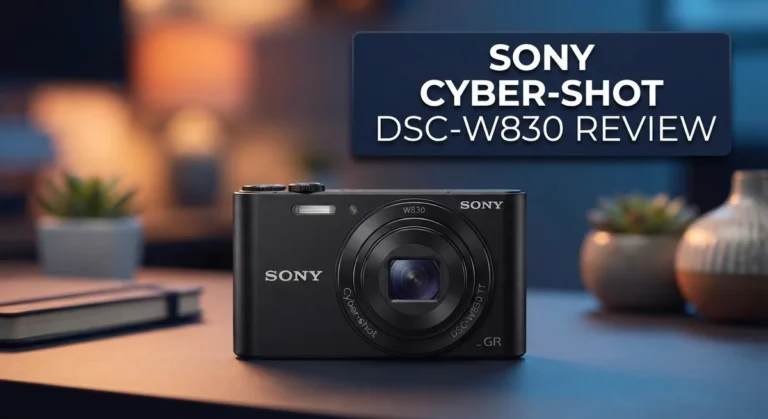
The Sony DSC-HX80 has a sleek and compact design that makes it perfect for everyday carry. The body is made from a mix of plastic and metal components. It feels solid in the hand without adding unnecessary weight.
At just 8.64 ounces with the battery and memory card inserted, this camera is truly pocket-friendly. You will not feel burdened carrying it around all day. The smooth edges and rounded corners make it comfortable to grip.
The top of the camera houses the pop-up flash, the retractable electronic viewfinder, and the zoom lever wrapped around the shutter button. The layout is intuitive and easy to learn. A dedicated mode dial sits on the top right, giving you quick access to auto, manual, and scene modes.
The rear of the camera features a 3.0-inch TFT LCD screen with 921,600 dots. It flips up 180 degrees for selfies and vlogging. The screen quality is bright and sharp enough for outdoor shooting. However, it is not a touchscreen, which feels a bit dated in 2026.
Overall, the build quality is good for a compact camera at this price point. It won’t survive a heavy drop, but normal everyday use should not cause any issues.
18.2MP Exmor R CMOS Sensor: Image Quality Breakdown
The heart of the Sony DSC-HX80 is its 18.2-megapixel Exmor R CMOS sensor. This is a 1/2.3-inch back-illuminated sensor. The back-illuminated design allows more light to reach the sensor, which improves performance in dim conditions.
Images captured with this camera are sharp and detailed in good lighting. Colors appear natural with accurate white balance in auto mode. The BIONZ X image processor handles noise reduction and color processing efficiently.
In low light, the camera holds up reasonably well at ISO 800. Push it beyond ISO 1600, and you will notice visible noise and some softness. The Multi-Frame NR mode can push ISO up to 12800, stacking multiple frames to reduce grain. This helps but does not match larger-sensor cameras.
Dynamic range is limited due to the small sensor size. Shadows can appear crushed in high-contrast scenes. However, the Auto HDR mode helps recover detail in highlights and shadows by blending multiple exposures.
For prints up to 8×10 inches and social media sharing, the image quality is more than sufficient. Professional large-format printing will expose the sensor’s limitations. But for its intended purpose as a travel and everyday camera, the HX80 delivers pleasing results.
ZEISS 30x Optical Zoom Lens Performance
The ZEISS Vario-Sonnar T lens* is one of the strongest features of the DSC-HX80. It provides a 30x optical zoom range, covering a 35mm equivalent focal length of 24mm to 720mm. That is an incredible range for a camera this small.
At the wide end (24mm), you can capture broad landscapes, group photos, and architecture with minimal distortion. At the telephoto end (720mm), you can zoom into distant wildlife, sports action, or concert stages. The T coating* reduces lens flare and ghosting for cleaner images.
The aperture ranges from f/3.5 at wide angle to f/6.4 at full telephoto. This means the lens needs more light at longer focal lengths. In bright daylight, this is not an issue. In dimmer conditions at full zoom, you may need to raise the ISO or slow down the shutter speed.
Clear Image Zoom extends the reach to an effective 60x zoom with smart digital processing. It maintains decent quality up to about 40x. Beyond that, softness becomes noticeable.
Autofocus uses a contrast-detection system. It locks on quickly in good light and slows down a bit in dim environments. For a compact camera, the focus accuracy is reliable for most everyday subjects.
Top 3 Alternatives for Sony Cybershot DSC-HX80
Canon PowerShot SX740 HS is an excellent alternative with a 40x optical zoom and 4K video recording. It offers 10 more zoom steps than the HX80 and shoots in Ultra HD resolution. This is a great pick if video quality matters to you.

- Powerful 40x Optical Zoom with Optical Image Stabilizer and Zoom Framing Assist
- 4K Video and 4K Time-lapse Movie
Last update on 2026-10-23 / Affiliate links / Images from Amazon Product Advertising API
Sony DSC-HX99 is the direct successor to the HX80. It adds 4K video, a touchscreen LCD, and a control ring around the lens. The sensor and zoom range remain similar, but the usability upgrades are significant.

- ZEISS Vario-Sonnar T* 24-720mm High Magnification Zoom and High Image Quality Lens
- Stunning 4K video with full pixel readout and no pixel binning
Last update on 2026-10-23 / Affiliate links / Images from Amazon Product Advertising API
Sony RX100 VII is a premium option with a much larger 1-inch sensor. It delivers superior image quality, faster autofocus, and 4K video. The zoom range is shorter at 24-200mm, but the overall performance is in a different league.

- 20. 1MP 1. 0 Type stacked CMOS sensor, Zeiss Vario Sonnar T 24 200 millimeter F2. 8 F4. 5 large aperture...
- 0. 02 sec. High AF speed, 357 point focal plane Phase detection AF and 425 point contrast detection AF

Last update on 2026-10-12 / Affiliate links / Images from Amazon Product Advertising API
Optical Image Stabilization: How Steady Are Your Shots?
The Sony DSC-HX80 features Optical SteadyShot image stabilization. This system compensates for hand shake during shooting. It is especially important at longer focal lengths where even small movements cause blurry images.
At 720mm equivalent, a tiny tremor in your hand translates to a significant shift in the frame. The optical stabilization moves lens elements to counteract this movement. In practice, it allows you to shoot handheld at shutter speeds about 2 to 3 stops slower than you normally could.
For video, the stabilization smooths out walking vibrations and minor hand movements. It does not replace a tripod or gimbal for professional-level smoothness. But for casual video clips while traveling, it produces watchable footage.
The stabilization performs best at moderate zoom levels. At maximum 30x zoom, the image preview in the viewfinder still jumps around a bit. You will get the best results by bracing your arms or resting the camera on a solid surface when shooting at full telephoto.
Compared to newer cameras with 5-axis in-body stabilization, the HX80’s system is less advanced. But for the camera’s size and price, it does a competent job of keeping your shots sharp.
Electronic Viewfinder: A Rare Compact Camera Feature
One feature that sets the DSC-HX80 apart from many compact cameras is its built-in retractable OLED electronic viewfinder (EVF). This tiny viewfinder pops up from the top of the camera with a press of a dedicated button.
The EVF has a 0.2-inch OLED display with approximately 0.5x magnification. It provides a clear and bright view for composing your shots at eye level. This is a genuine advantage when shooting outdoors in bright sunlight. LCD screens often wash out in direct sun, making it hard to see your composition.
Pressing the viewfinder against your face also adds a third point of contact with the camera. This reduces camera shake and leads to sharper images, especially at longer zoom levels.
The EVF automatically activates when you bring the camera up to your eye, thanks to a built-in eye sensor. The transition from LCD to EVF is smooth and quick.
While it is not as large or detailed as viewfinders found on mirrorless cameras, it is a luxury at this price and size. Many competing compact cameras in this category do not include a viewfinder at all. If you value eye-level shooting, the HX80 scores major points here.
Video Recording Capabilities
The Sony DSC-HX80 records video at a maximum resolution of 1080p Full HD at 60 frames per second. It supports XAVC S, AVCHD, and MP4 formats. The XAVC S format at 50 Mbps delivers the best quality with the most detail.
Video quality is clean and sharp in good lighting. Colors are consistent with still image output. The autofocus tracks moving subjects during video recording, though it can occasionally hunt in low contrast scenes.
The biggest limitation is the lack of 4K recording. In 2026, 4K has become the standard for most content creation. If you need 4K video, the HX80 is not the right choice. You would need to step up to the Sony HX99 or the Canon SX740 HS for that.
Audio is captured through a built-in stereo microphone. There is no external microphone jack. Audio quality is acceptable for casual clips but lacks the depth and clarity of a dedicated microphone.
The 180-degree flip screen is useful for vlogging and self-recording. The stabilization helps keep footage steady. For casual travel videos, family events, and social media content, the 1080p output remains usable. But serious video creators will find the HX80 limiting.
Battery Life and Charging
The Sony DSC-HX80 uses the NP-BX1 rechargeable lithium-ion battery. Sony rates this battery at approximately 390 shots per charge when using the LCD monitor. When using the electronic viewfinder, the count drops to about 360 shots.
For continuous video recording, you can expect around 105 minutes using the LCD. With the viewfinder, this extends slightly to about 115 minutes. These numbers are based on Sony’s testing under CIPA standards.
In real-world use, you can expect slightly lower numbers. Heavy use of zoom, flash, Wi-Fi, and NFC will drain the battery faster. A full day of shooting at a tourist destination will likely require a spare battery or a mid-day charge.
Charging is done through the Micro USB port using the supplied AC adapter. This is convenient because you can charge the camera with a portable power bank on the go. However, the Micro USB connector feels outdated in 2026 when USB-C is the universal standard.
The NP-BX1 battery is widely available and affordable. It is also used across many other Sony cameras. Buying a spare or two for extended trips is a smart investment.
Wi-Fi, NFC, and Connectivity Features
The DSC-HX80 comes with built-in Wi-Fi and NFC for wireless image transfer and remote control. You can connect the camera to your smartphone using the Sony Imaging Edge Mobile app.
Once connected, you can transfer photos wirelessly to your phone for quick editing and sharing on social media. The NFC feature allows one-touch pairing with compatible Android devices. Simply tap the phone against the camera, and they connect instantly.
The Wi-Fi also enables remote shooting from your smartphone. You can see a live view from the camera on your phone screen and trigger the shutter remotely. This is useful for group photos, wildlife shots from a distance, and creative setups with the camera on a tripod.
Transfer speeds over Wi-Fi are adequate for individual images but can be slow for large batches. Selecting and transferring 50 or more images may take several minutes.
The camera connects via Micro USB for wired transfer and charging. It also has a Micro HDMI port for connecting directly to a TV or monitor for playback. The absence of Bluetooth for a persistent low-power connection is noticeable. Newer cameras in this class offer Bluetooth alongside Wi-Fi for a more seamless experience.
Shooting Modes and Creative Features
The Sony DSC-HX80 offers a generous selection of shooting modes and creative options. The mode dial on top provides access to Intelligent Auto, Superior Auto, Program, Aperture Priority, Shutter Priority, Manual, Memory Recall, Movie, Panorama, and Scene Selection modes.
Intelligent Auto analyzes the scene and selects the best settings automatically. It works well for point-and-shoot situations. Superior Auto goes a step further by combining multiple frames to improve dynamic range and reduce noise.
The manual controls (Aperture Priority, Shutter Priority, Full Manual) give experienced photographers full creative control. The aperture range is limited to f/3.5 to f/8.0 at wide angle, but you can still control depth of field and exposure creatively.
Scene modes include Portrait, Landscape, Sunset, Night Scene, Handheld Twilight, Sports, Pet Mode, Gourmet, and more. Each mode optimizes settings for specific subjects.
The camera also includes Picture Effects like Toy Camera, Pop Color, Posterization, Soft Focus, Miniature, Watercolor, and HDR Painting. These add artistic flair directly in-camera without post-processing.
Sweep Panorama captures ultra-wide panoramic images by panning the camera across a scene. It stitches the frames together automatically. The results are impressive for landscapes and cityscapes.
Who Should Buy the Sony DSC-HX80 in 2026?
- 30x Optical/60x Clear Image Zoom ZEISS Vario-Sonnar T* Lens, 18.2MP Exmor R CMOS Sensor for superb low...
- Versatile video w/ high-quality XAVC S, AVCHD & MP4 formats, Simple connectivity to smartphones via Wi-Fi...
Last update on 2026-10-23 / Affiliate links / Images from Amazon Product Advertising API
The Sony DSC-HX80 is best suited for a specific type of user in 2026. Understanding who benefits most from this camera will help you decide if it is the right purchase.
Travelers will love this camera. The compact size, powerful 30x zoom, and reliable image quality make it a perfect travel companion. It fits in a pocket, captures wide landscapes, and zooms into distant landmarks with ease.
Casual photographers who want better photos than a smartphone can deliver will also appreciate the HX80. The optical zoom, better low-light performance, and dedicated camera controls offer a noticeable upgrade over phone cameras.
Parents and family photographers will find the auto modes and face detection features helpful for capturing candid moments of children and pets.
However, if you are a professional photographer, serious videographer, or content creator who needs 4K video, a larger sensor, or advanced autofocus, the HX80 will feel limiting. You should consider the Sony RX100 VII, the Sony HX99, or a mirrorless camera instead.
Budget-conscious buyers looking for a used or refurbished unit can find the HX80 at attractive prices. It offers solid value if you accept its limitations.
Sony DSC-HX80 Pros and Cons Summary
Every camera has strengths and weaknesses. Here is an honest look at where the Sony DSC-HX80 shines and where it falls short in 2026.
The pros are significant. The 30x optical zoom in a pocket-sized body is hard to beat. The ZEISS lens delivers sharp images across most of the zoom range. The retractable electronic viewfinder is a premium feature rarely found in compact cameras at this level. Image stabilization works well for both photos and videos. Wi-Fi and NFC make sharing easy. The 180-degree flip screen supports selfies and vlogging.
The cons are worth noting too. The 1/2.3-inch sensor limits low-light performance and dynamic range compared to 1-inch sensor cameras. The absence of 4K video is a notable gap in 2026. The Micro USB port feels outdated. There is no touchscreen, which slows down menu navigation. The autofocus system uses contrast detection instead of the faster phase detection found in newer models. Battery life is adequate but not exceptional.
The HX80 occupies a sweet spot between smartphones and larger cameras. It does not try to be everything. It focuses on delivering a great zoom experience in the smallest possible package. That focus is both its biggest strength and its defining characteristic.
How Does the HX80 Compare to Smartphones in 2026?
This is a fair and important question. Smartphones in 2026 have excellent cameras with computational photography features. So where does a dedicated compact camera like the HX80 still have an edge?
The optical zoom is the HX80’s greatest advantage. Smartphones use digital crop and periscope lenses to simulate zoom, but a true 30x optical zoom delivers far better quality at long distances. If you photograph wildlife, distant architecture, or sports, the HX80 produces sharper telephoto images than any phone.
The electronic viewfinder is another advantage. No smartphone offers an eye-level optical viewing experience. This improves shot composition and stability.
Smartphones win in other areas. They process images with AI-powered algorithms that produce stunning results in portrait mode, night mode, and HDR scenes. Smartphones also offer instant sharing, app-based editing, and always-connected convenience.
For social media snapshots and everyday quick photos, a 2026 smartphone is often more convenient. But for travel photography where zoom matters, the DSC-HX80 still earns its place. It serves a different purpose than your phone. The two complement each other rather than compete directly.
Final Verdict: Is the Sony DSC-HX80 Worth Buying in 2026?
The Sony Cybershot DSC-HX80 remains a capable compact camera in 2026. It does not have 4K video or a cutting-edge autofocus system. But it delivers a powerful 30x zoom, a solid 18.2MP sensor, and a built-in electronic viewfinder in a body that fits in your pocket.
If your primary need is a lightweight travel camera with long zoom capability, the HX80 is still a strong option. The ZEISS lens produces quality images, and the stabilization keeps them sharp. The flip-up screen and Wi-Fi connectivity add practical value.
The camera is best purchased at current market prices, which have dropped from the original retail price. Used and refurbished units offer even better value. If you can find it under $300, it represents a solid deal for what it delivers.
For those who want newer features like 4K video, a touchscreen, or USB-C charging, the Sony HX99 is the logical upgrade. For significantly better image quality, the Sony RX100 VII is worth the premium.
The DSC-HX80 proved itself over the years as a dependable pocket zoom camera. In 2026, it has not lost that identity. It remains a smart choice for the right user at the right price.
Frequently Asked Questions
Does the Sony DSC-HX80 shoot 4K video?
No, the Sony DSC-HX80 does not support 4K video recording. It records at a maximum resolution of 1080p Full HD at 60 frames per second. If 4K video is essential for you, consider the Sony HX99 or the Canon PowerShot SX740 HS as alternatives.
Is the Sony DSC-HX80 good for travel photography?
Yes, the Sony DSC-HX80 is an excellent travel camera. Its compact size, lightweight body, 30x optical zoom, and built-in electronic viewfinder make it ideal for capturing landscapes, landmarks, and distant subjects on the go.
What memory card does the Sony DSC-HX80 use?
The Sony DSC-HX80 accepts SD, SDHC, SDXC memory cards (UHS-I compatible) as well as Memory Stick Duo and Memory Stick Micro formats. A Class 10 or UHS-I SDXC card is recommended for the best performance, especially when recording video.
Can you charge the Sony DSC-HX80 with a power bank?
Yes, you can charge the Sony DSC-HX80 using a USB power bank through its Micro USB port. This makes it convenient for travelers who need to recharge the battery on the go without access to a wall outlet.
How far can the Sony DSC-HX80 zoom?
The Sony DSC-HX80 has a 30x optical zoom that covers a 35mm equivalent focal length of 24mm to 720mm. The Clear Image Zoom feature extends this to an effective 60x zoom with digital processing, giving you even more reach for distant subjects.
Is the Sony DSC-HX80 still worth buying in 2026?
The Sony DSC-HX80 is still worth buying in 2026 if you prioritize compact size and powerful zoom over 4K video and advanced features. It delivers reliable image quality and a great zoom range at a lower price than newer models. For budget-conscious travelers and casual photographers, it remains a smart purchase.

Hi, I’m Joy! I’m a passionate tech enthusiast with years of experience testing and reviewing the latest gadgets and software. I started TechReviewed.blog because I believe everyone deserves access to honest, straightforward tech advice without the marketing fluff.